If you are comparing upper and lower Bel Air, the biggest mistake is treating them like the same market. Bel Air is better understood as a collection of site-driven micro-markets, where slope, access, privacy, and usable land can matter as much as the house itself. If you want to buy, sell, or evaluate a property here, understanding how these two sections differ can help you make a smarter decision. Let’s dive in.
Why Bel Air Is Not One Market
Bel Air has long been shaped by its land, not just its address. The area broadly sits between Mulholland, Sunset, Beverly Glen, and Sepulveda, and its original layout created meaningful differences between flatter southern areas and steeper northern hillsides.
That matters because Bel Air has a thin transaction count and a very wide range of product types. One property may be a classic estate on largely flat land, while another may be a view home on a challenging hillside lot. In a market like this, broad numbers can be useful, but only if you know what they measure.
For example, a recent public snapshot showed 153 homes for sale in Bel Air with a median listing price of $6.50 million, median price per square foot of $1,300, 61 days on market, and a 93% sale-to-list ratio. Separate closed-sale reporting has shown a median sale price of $3.1 million and $1,060 per square foot in one recent month, while the broader Bel Air-Holmby Hills single-family micro-market posted a Q2 2025 median sale price of $4.75 million, average price per square foot of $1,680, and 42 closed sales.
The key takeaway is simple: asking-price snapshots, closed-sale metrics, and broader micro-market figures are not interchangeable. In Bel Air, the difference between upper and lower often starts with the land itself.
Upper Bel Air at a Glance
Upper Bel Air is the local shorthand for the hillier Roscomare and Beverly Glen side of the neighborhood. This is where buyers often focus on panoramic canyon outlooks, reservoir views, sunset exposures, and a stronger sense of elevation and retreat.
Many upper Bel Air homes are marketed around privacy and indoor-outdoor living. Contemporary and mid-century designs appear often in this part of the market, although architectural styles vary and there are many exceptions.
What surprises some buyers is that upper Bel Air is not only steep hillside product. Some properties have notably usable pads, generous setbacks, and layouts that make entertaining or daily living easier than the topography might suggest from the street.
What Typically Draws Buyers to Upper Bel Air
Buyers are often drawn to upper Bel Air for a few consistent reasons:
- Canyon, reservoir, and sunset views
- A more elevated, tucked-away feel
- Privacy created by hillside positioning
- Strong indoor-outdoor flow on well-designed sites
- Contemporary or mid-century architectural presentation in many listings
If your priority is a dramatic setting, upper Bel Air often delivers that in a way lower Bel Air cannot. The tradeoff is that site usability can vary sharply from one property to the next.
Lower Bel Air at a Glance
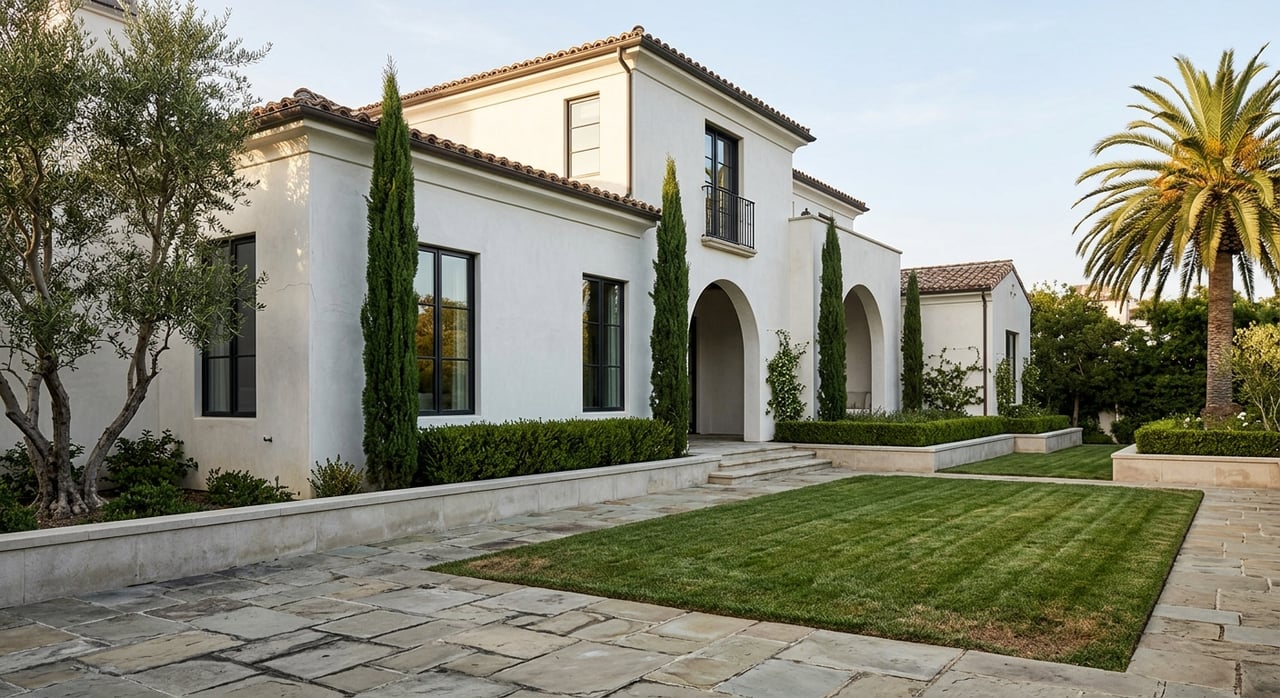
Lower Bel Air is the local shorthand for the flatter, more southern or southwestern section closer to Sunset and the Bel-Air Country Club. Here, the conversation often shifts from pure views to grounds, frontage, access, and day-to-day convenience.
Listings in lower Bel Air frequently emphasize gated entries, motor courts, estate-scale lawns, and larger usable lots. This area is also often associated with club adjacency, broad fairway outlooks, and a more traditional estate presentation.
In practical terms, lower Bel Air is not just flatter. It is also often easier to circulate through on a daily basis, and many buyers value that convenience as much as the architecture itself.
What Typically Draws Buyers to Lower Bel Air
Common reasons buyers focus on lower Bel Air include:
- Flatter parcels with more usable outdoor space
- Gated estates with stronger arrival sequences
- Motor courts and easier guest parking
- Proximity to Sunset access
- Club frontage or golf course outlooks on select properties
For buyers who want land that feels immediately functional, lower Bel Air often has a clear advantage. For sellers, that usability can also support stronger buyer demand when the site is well positioned.
The Real Difference: Land Utility
In Bel Air, the parcel is often the product. That is especially true when you compare upper and lower Bel Air side by side.
A beautiful house on a difficult lot may compete against a less flashy house on much more useful land. Flat acreage, lot width, frontage, privacy, and room to expand or rebuild can all have a major effect on value.
The neighborhood’s planning history also supports this. Smaller lots have often been absorbed into larger holdings over time, and many original homes have been demolished or repositioned as buyers pursued better site utility.
Why Lot Quality Changes Everything
When evaluating a Bel Air property, these factors often matter more than finishes:
- Slope and grading complexity
- Flat pad size
- Frontage and driveway access
- Privacy from neighboring lots
- Setbacks and rebuild flexibility
- Demolition or expansion feasibility
- Engineering demands before construction begins
This is why two homes with similar square footage can trade very differently. In Bel Air, house value and land value do not always move together.
Views Versus Usable Grounds
One of the clearest differences between upper and lower Bel Air comes down to what kind of lifestyle the site supports. Upper Bel Air usually has the edge for canyon, reservoir, and sunset views.
Lower Bel Air often wins on broad usable grounds, club adjacency, and estate-style outdoor living. If you are choosing between the two, it helps to decide whether your priority is visual drama or land utility.
Of course, the best properties can offer both. A strong upper Bel Air property may have a surprisingly flat pad, while an exceptional lower Bel Air estate may pair usable acreage with far-reaching views.
Daily Access and Convenience
Topography changes how a neighborhood feels in everyday life. In Bel Air, access to Sunset, the main canyon routes, and local destinations can influence how convenient a property feels over time.
Lower Bel Air often benefits from easier circulation because it sits closer to Sunset and the country club area. Upper Bel Air can feel more secluded, which many buyers value, but that may also mean a more winding daily approach.
Neither is universally better. It depends on whether you want faster day-to-day access, or whether privacy and elevation matter more to you.
Architecture Tends to Read Differently
Bel Air has a strong architectural legacy, with a history of architect-designed homes and carefully planned estate development. The neighborhood’s original vision included underground utilities, bridle trails, stables, and a country club, and that legacy still shapes its identity today.
In broad terms, lower Bel Air often leans more traditional in its older estate fabric, including period-revival homes and classic formal layouts. Upper Bel Air listings more often present mid-century or contemporary architecture, though there are many exceptions in both sections.
For buyers, this means the upper-versus-lower decision is not just about location. It is also often about what kind of architectural experience you want to live with and preserve.
Families, Entertaining, and Redevelopment
Different property goals can point you toward different parts of Bel Air. For families, flatter streets, easier school access, and more manageable topography often make lower Bel Air or the more usable-pad portions of upper Bel Air worth close attention.
For school planning, LAUSD uses address-based resident school assignment. Families should verify school options by exact address, and the district also offers magnets, SAS, charters, open enrollment transfers, and Zones of Choice.
For entertaining, lower Bel Air often stands out when a property offers flat lawns, motor courts, and a strong arrival sequence. Upper Bel Air can be equally compelling when the home is designed around sunset views, privacy, and indoor-outdoor flow.
For investors and developers, the better opportunity is not automatically upper or lower. The better opportunity is usually the site with the right combination of flat land, frontage, privacy, and practical build potential.
Why Review and Build Factors Matter
Bel Air buyers should think beyond finishes and staging. Design review, topography, earthwork, setbacks, demolition status, and tree-related documentation can all affect cost, timing, and risk before construction or major renovation even begins.
The Bel-Air Association’s architectural review process reflects how seriously site planning is treated in the neighborhood. That is one reason experienced guidance matters so much in Bel Air, especially when a property’s long-term value depends on what can be improved, expanded, or rebuilt.
Which Side Fits Your Goals?
If you want sweeping views, a more elevated setting, and a strong sense of retreat, upper Bel Air may be the better fit. If you want flatter grounds, easier circulation, and a more classic estate framework, lower Bel Air may be the stronger choice.
The truth is that the best opportunities in either section tend to be highly specific. In Bel Air, the winning property is often the one where land, access, privacy, and architecture come together in the right balance.
If you are weighing a purchase, considering a sale, or trying to understand how your property fits within Bel Air’s micro-markets, working with someone who knows the nuance can make all the difference. For a confidential consultation or private valuation, connect with Joe Babajian.
FAQs
What is the difference between upper and lower Bel Air?
- Upper Bel Air generally refers to the hillier Roscomare and Beverly Glen side, while lower Bel Air usually refers to the flatter southern or southwestern area closer to Sunset and the Bel-Air Country Club.
Which part of Bel Air has better views?
- Upper Bel Air usually has the advantage for canyon, reservoir, ocean, and sunset views, while lower Bel Air more often offers club frontage and broad usable grounds.
Which part of Bel Air is better for families?
- Many families prefer areas with flatter streets, easier daily access, and more manageable lot topography, which often points to lower Bel Air or select upper Bel Air properties with usable pads.
How should buyers evaluate land in Bel Air?
- Buyers should look closely at slope, flat pad size, frontage, access, privacy, setbacks, and whether the property is best suited for a hold, remodel, or redevelopment strategy.
Are schools in Bel Air assigned by neighborhood section?
- No. LAUSD uses address-based resident school assignment, so school options should always be verified by exact property address.
Is lower Bel Air always more valuable than upper Bel Air?
- Not necessarily. Value depends on the specific site, including land utility, privacy, views, frontage, architecture, and improvement potential, not just whether a home is in upper or lower Bel Air.