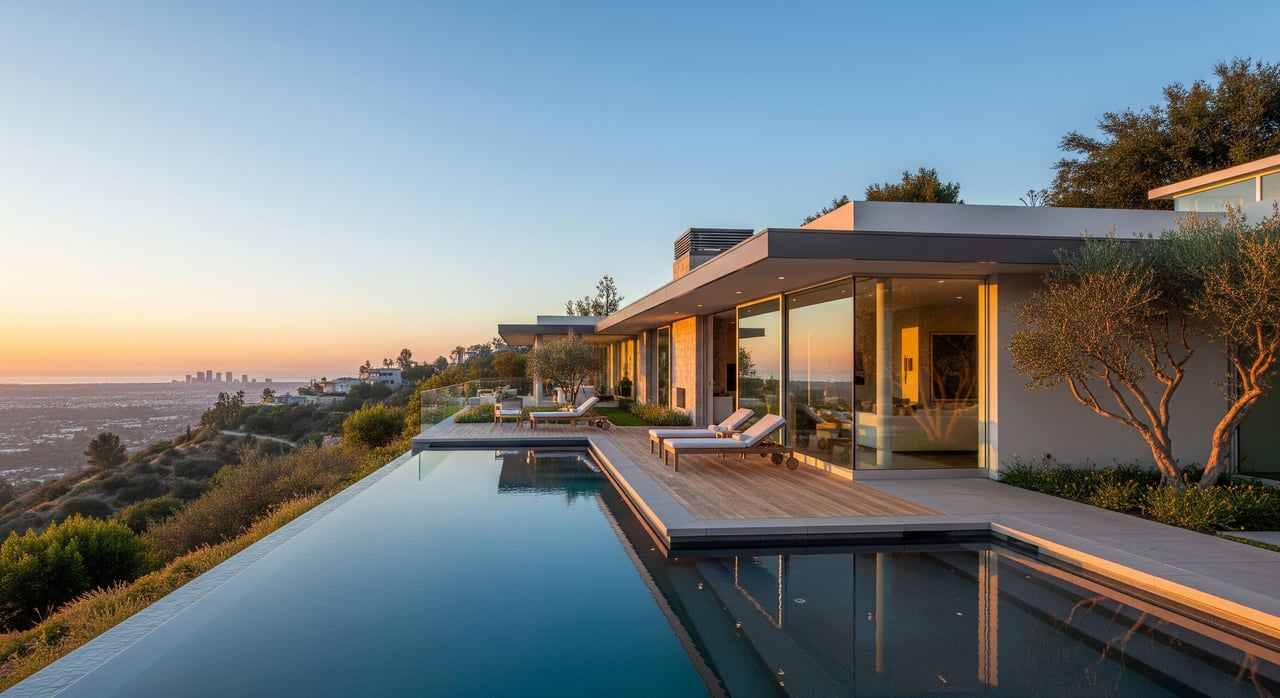
Chasing a city-light panorama or a quiet canyon outlook? In the Hollywood Hills, a small shift in orientation can change your privacy, comfort, and even long-term enjoyment. This guide shows you how to read views, sun patterns, and sightlines like a pro, with practical checklists you can use on every showing. Let’s dive in.
Why Hollywood Hills views vary
Steep ridges and narrow canyons define the Hollywood Hills. Lots sit on ridgelines, along cul-de-sacs, or on terraces cut into slopes. That terrain creates different experiences from one house to the next, even on the same street.
Ridgelines vs. canyons
Ridgeline homes often deliver sweeping exposures across Los Angeles and beyond. You get drama, but you are also more exposed to wind and sun, and your home may be visible from multiple vantage points. Canyon-facing properties tend to feel more sheltered and private, with cooler mornings and less wind exposure, though they usually do not offer a distant horizon.
Cul-de-sacs and spur lots
Cul-de-sacs reduce through traffic and often feel quieter. If the cul-de-sac sits on a spur off a ridge, you may capture excellent views. Privacy can still vary if neighboring lots sit higher and look inward toward the cul-de-sac, so always verify sightlines.
View types at a glance
The Hills offer a handful of classic outlooks. Knowing what each delivers helps you match your lifestyle to the right property.
- City-light views. Big south, southeast, or east exposures can frame Hollywood, central Los Angeles, and downtown. Night views are striking. Vegetation growth or new construction can affect these sightlines over time, so verify what is protected in the title and what is not.
- Canyon outlooks. These inward views read lush and serene. They trade distant horizons for seclusion and microclimate differences that can feel cooler in the morning.
- Ocean glimpses. Higher ridgelines or clean southern and western exposures may catch the ocean on clear days. Elevation, intervening terrain, and seasonal clarity matter, with winter and early spring often offering superior visibility.
- Layered views. Many homes blend a canyon foreground with city lights or an ocean sliver in the distance. Elevation and orientation determine which element dominates.
Orientation and natural light in LA
Los Angeles enjoys strong sun most of the year. The sun is higher in summer and lower in winter, with southern exposures providing the most consistent daylight.
What each exposure gives you
- South-facing: Balanced daylight year-round and gentle winter warming. Ideal for main living spaces.
- West-facing: Strong afternoon and evening sun that can create glare and heat gain, especially in summer. Terraces and rooms can run hot late in the day without shading.
- East-facing: Pleasant morning light and less afternoon heat. Great for bedrooms or kitchens if you enjoy AM light.
- North-facing: Soft, diffuse light with minimal direct solar gain. Useful for studios or glare-sensitive spaces.
Outdoor living and seasonal checks
Decks and patios on west exposures can be hot at sunset. South-facing terraces see steady sun and remain usable through winter. To understand true conditions, visit at sunrise, mid-day, and late afternoon, then repeat on a clear day and a typical haze day. If possible, check in different seasons or use a sun-path tool to model shadows before you commit.
Privacy and sightlines
In the Hills, privacy is shaped by elevation, orientation, and neighbors rather than fences alone. Ridgeline properties are visible from more places, while canyon lots tend to conceal you from a distance.
What to verify before you offer
- Map relative elevations with a site survey or topographic map. Note whether neighboring finished floors sit above or below yours.
- Review the title report for any recorded view easements or covenants. In California, views are not automatically protected without an easement or similar restriction.
- Identify public vantage points such as trails, road curves, or future development parcels that could introduce sightlines.
- Evaluate vegetation that provides privacy today and its potential growth or removal. Confirm any HOA or neighbor rights related to tree trimming.
Landscaping realities
Mature trees can be your best screen and your biggest variable. Trees grow, shed, and can be trimmed or removed depending on rights and rules. Treat a planted screen as dynamic. Confirm maintenance responsibilities and any restrictions that could affect your privacy.
Glazing, comfort, and noise
Windows are the interface between your views and your comfort. In a sun-rich climate and complex acoustic setting, the right specs matter.
Window metrics that matter
- U-factor (insulation): Lower is better. For modern double glazing in this climate, a range around 0.25 to 0.35 improves comfort and reduces night heat loss.
- Solar Heat Gain Coefficient (SHGC): Lower reduces cooling loads. Aim near 0.25 to 0.40 on sun-exposed elevations, with the lower end favored for west-facing glass.
- Visible Transmittance (VT): Higher means more daylight. Balance this with glare control.
- Low-E coatings and gas fills: Common, effective upgrades that enhance performance.
- Safety and sound: Tempered safety glass is required in certain locations. Laminated glazing improves sound attenuation and can enhance security at doors and low railings.
Sound control near corridors
Proximity to US-101, Laurel Canyon, Sunset Strip, or other busy corridors can add ambient noise, especially on lower or east-facing lots. Smartphone apps can provide rough decibel readings during rush hour and late evening. For window assemblies, STC ratings in the 30 to 35 range are typical, while STC 40 and above can deliver a noticeable improvement if road noise is a concern. Nighttime outdoor noise levels often exceed quiet targets in urban settings, so plan for acoustic upgrades inside if you are sensitive.
Safety, wildfire, and permitting
Many parts of the Hollywood Hills sit in wildfire-prone zones and on steep slopes. This affects insurance, preparedness, and renovation timelines.
Hillside rules and reports
Los Angeles hillside development and grading rules require careful planning for new work or major exterior changes. Steep-slope projects commonly need geotechnical reports and special permits, and setbacks or building envelopes can be constrained by slope. Retaining walls, major decks, and grading typically need permits and inspections through local building and safety departments.
Wildfire readiness and slopes
Confirm defensible space needs and vegetation management. After a fire, slope erosion and drainage become critical, so ensure the property has appropriate erosion control and that any past repairs are well documented. Insurance and evacuation practicality should be reviewed early in due diligence.
Decks, walls, and drainage basics
Look for structural integrity and proper waterproofing at decks and terraces. Retaining walls should sit plumb without cracking or leaning, and drainage should move water away from structures and slopes toward safe release points. Ask for permits and engineering for significant walls and outdoor structures.
How to evaluate a view home like a pro
Use this focused checklist on showings and during due diligence to avoid surprises.
Views and sightlines
- Walk the property at multiple times: morning, mid-day, late afternoon, and dusk.
- Photograph each key room and outdoor area and note the compass direction of each view.
- Confirm finished floor elevation versus neighbors using a topo map or survey.
- Review the title for view easements, conservation easements, or restrictions.
- Note nearby vacant lots or low buildings that might be redeveloped.
Sun and comfort
- Identify the orientation of primary living areas and terraces.
- Use a sun-path app to model seasonal shadows on major windows and decks.
- Test west-facing rooms for glare and late-day overheating with shades open.
- Ask when windows were last replaced and request manufacturer specs or labels.
Glazing and envelope
- Record window type: single, double, or triple pane, plus any Low-E and gas fill.
- Inspect for failed seals or condensation between panes and check hardware.
- Target performance ranges: U-factor about 0.25 to 0.35, SHGC about 0.25 to 0.40 on sun-exposed sides, adjusted for shading.
- If noise is a concern, request STC data or budget for an acoustical consult.
- Confirm tempered or laminated glass where codes require for safety.
Outdoor living and structure
- Inspect decks and railings, waterproofing, and flashing for wear.
- Review permits and engineering for large decks or retaining walls.
- Trace drainage paths and confirm gutters and downspouts discharge safely.
- Evaluate vegetation for both privacy screening and fire safety.
Noise and nuisance
- Identify the nearest major road and estimate line of sight to it.
- Visit during rush hour and late evening. Take sample readings with a phone app.
- Ask about neighborhood nightlife patterns if near Hollywood or Sunset.
Safety, wildfire, and permits
- Check local fire hazard maps and defensible space requirements for the parcel.
- Confirm recent brush clearance or fuel modification and who is responsible.
- Ask for geotechnical reports, grading permits, and any history of slope repairs.
Matching view goals to your lifestyle
If you want cinematic night views, a south or southeast-facing ridgeline will likely deliver, but plan for sun control and privacy strategies. If you prefer privacy and cooler mornings, a canyon-facing home may fit better, with careful attention to vegetation management. For sunset terraces, a west exposure can be unforgettable when paired with shading, the right glazing, and materials that handle heat.
Working with a local advisor
Buying in the Hollywood Hills is about nuance. Orientation, ridgelines, and regulations influence everything from morning light to your renovation timeline. A seasoned advisor can read these details quickly, line up the right consultants, and protect your privacy throughout the process.
If you are exploring a move or want a second opinion on a property’s view potential, connect with Joe Babajian for a confidential consultation.
FAQs
Are views legally protected in Los Angeles?
- In California, views are generally not protected unless a recorded easement or covenant exists, so you should verify any protections in the title report.
Which orientation provides the most consistent daylight?
- South-facing glazing delivers the most even, year-round daylight in Los Angeles, with gentle winter warming for living spaces.
How can I evaluate noise near the 101 or major corridors?
- Visit at rush hour and late evening, take sample readings with a smartphone app, and consider laminated or acoustically rated windows if traffic noise is a concern.
What window specs help with heat and glare on west exposures?
- Look for Low-E double glazing with a U-factor around 0.25 to 0.35 and SHGC near 0.25 to 0.40, selecting the lower SHGC end for west-facing glass.
How can I check if a deck or retaining wall was permitted?
- Request permit history and engineering reports, and have a structural or geotechnical engineer review significant terraces and walls during due diligence.
When are ocean glimpses possible from the Hills?
- Higher ridgelines or clean southern and western exposures can reveal ocean glimpses on clear days, with visibility often better in winter and early spring.